A friend posted this, and I have to share it. We all know how easy it is to say the wrong thing when someone’s ill or in a crisis. Some otherwise caring people avoid connecting with loved ones during those times simply because they don’t know what to do or say. This article is a simple “how to” for providing support to those in need without making things worse. A Must-Read! http://articles.latimes.com/2013/apr/07/opinion/la-oe-0407-silk-ring-theory-20130407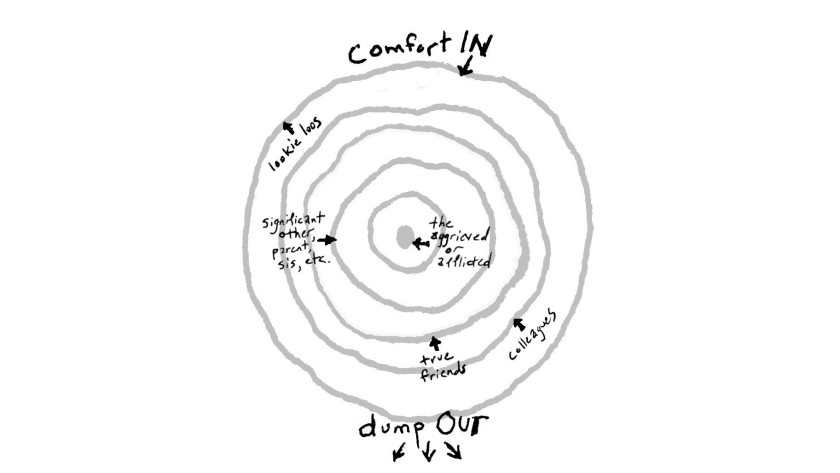
Category Archives: Blog
Maternal Ambivalence
When You Love Your Kids but Don’t Love Motherhood

If you are a mother, you have probably experienced at least one day (if not many) when you wondered if you were cut out for the job of parenting. Mothering is hard work. Even on our best days parenting our kids, there are difficult moments. Many days, it is the occasional joyful moment that makes it all worthwhile. Other times, it may not feel like the good justifies the bad.
Can You Recover from Depression Without Medication?
 An article I wrote for the GoodTherapy.org blog. The important take-away: depression is a serious illness. Mild to moderate depression often can be treated through psychotherapy and improved relationships and self-care. But if you need medication to recover, it’s still important to get better however you need to.
http://www.goodtherapy.org/blog/can-depression-be-cured-without-medication-1117144
People-Pleasing Moms: At Risk
 One of the common themes I come across when working with mothers experiencing depression and anxiety is perfectionism and people-pleasing. Moms get worn out when they are trying to make everyone happy all the time.
There are often good reasons for a tendency to be over-responsible for the feelings of others. Many of us come from families where there was an unspoken expectation that a child must be “good,” because one or both parents were unable to tolerate the challenge of even normal childhood misbehavior. Or sometimes, children develop an unconscious habit of caretaking for others as a way to get their own needs met.
Take a test to see if you have Prenatal or Postpartum Depression
Does Your Personality Style Put You at Risk for Postpartum Depression?

By Meri Levy, MA, MFT
What are the risk factors for Postpartum Depression and anxiety? Can your personality contribute to your risk? Check out this article of mine, published on www.GoodTherapy.org.
Take a test to see if you have Prenatal or Postpartum Depression
How Doulas Can Help With Postpartum Depression
 On Wednesday, I was invited to speak to a group of local doulas, the Mt. Diablo Doula Community, about prevention of Perinatal Mood and Anxiety Disorders (PMADs), as well as how to recognize the disorders and how to help their clients. I hope the presentation might be helpful for doulas who are wanting more information about these disorders and what role they can play in keeping moms healthy and happy. You can access the Presentation Here. Attachments to the presentation are the Edinburgh Postnatal Depression Scale and an associated Suicide Screening Interview.
Good Faith Estimate Notice
You have the right to receive a “Good Faith Estimate” explaining how much your medical and mental health care will cost.
Under the No Surprises Act, health care providers need to give clients who don’t have insurance or who are not using insurance an estimate of the expected charges for medical services, including psychotherapy services.
You have the right to receive a Good Faith Estimate for the total expected cost of any non-emergency healthcare services, including psychotherapy services. You can ask your health care provider, and any other provider you choose, for a Good Faith Estimate before you schedule a service.
Meri Levy, LMFT is an out-of-network provider and therefore is required to provider a Good Faith Estimate and to inform you that lower cost care may be available through an in-network provider.
If you receive a bill that is at least $400 more than your Good Faith Estimate, you can dispute the bill. Make sure to save a copy or picture of your Good Faith Estimate.
For questions or more information about your right to a Good Faith Estimate, visit www.cms.gov/nosurprises.
Reading Your Baby’s Cues
People have a physiological reaction to the sound of a baby crying. Our hearts pound, our blood pressure rises, and we start to sweat. This reaction causes most of us to try to stop the crying, regardless of how tired, irritable, or hungry we might be ourselves. And that’s a good thing. It’s how our babies learn to trust that their needs will be met and that the world is a safe place.
But sometimes (often!) new parents wonder what the baby is trying to say? What does the baby need? We run around randomly, trying different remedies: jiggling the baby, rocking the baby, changing her diaper, offering a breast or the bottle, or a pacifier. And sometimes the baby still cries. We desperately want to eliminate the cause of the crying, and we become frustrated, angry or guilty when we fail.