Tag Archives: mind-body

Empowering Mind-Body Healing for Women

A supportive, empowering message to women who have had their pain and symptoms dismissed for far too long.
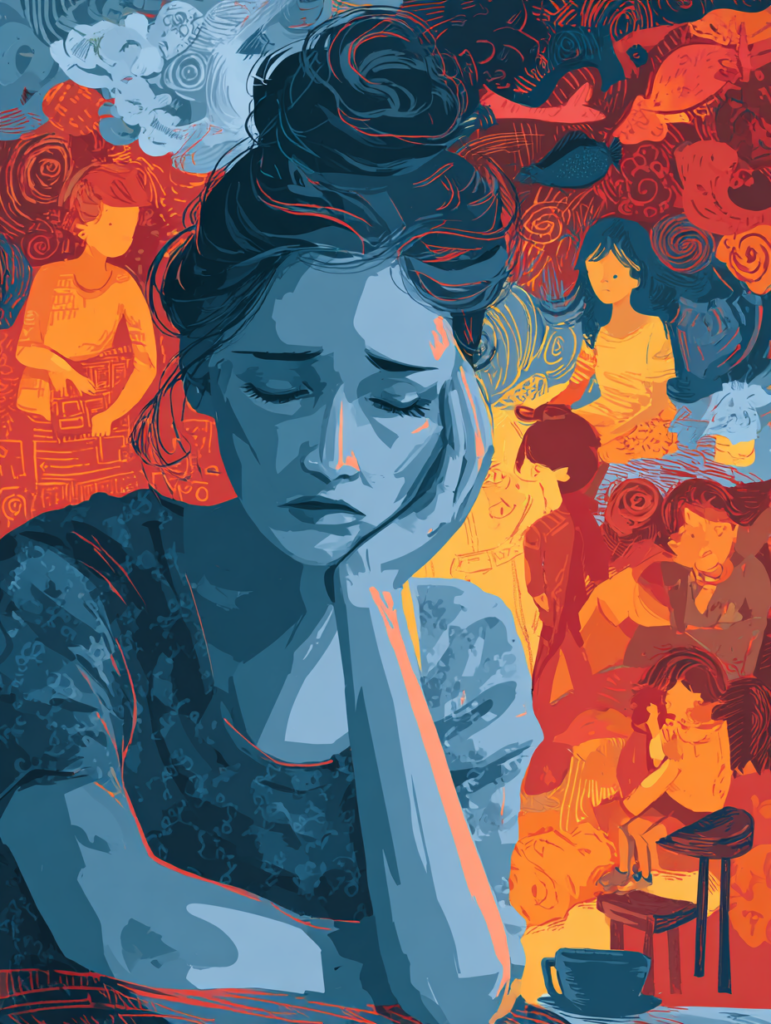
For generations, possibly since the advent of modern medicine, women’s health concerns have been minimized, misunderstood, or dismissed outright. Women have been labeled “hysterical,” “dramatic,” or “too sensitive” when they were suffering with very real physical conditions. Many of us have been told our symptoms are “all in our heads,” that we’re overreacting, and that we simply need to calm down or push through. Or to “just get over it.”

Given that history, it is completely understandable that the idea of mind–body healing can feel uncomfortable or even insulting. For many women, it appears to echo the same harmful messages we’ve heard their whole lives:
“You’re imagining it.”
“It’s your fault.”
“Just get over it.”

That’s the opposite of what women deserve. 

Women are not “more emotional.” We are more burdened.

Women experience higher rates of chronic pain, autoimmune illness, migraines, IBS, fatigue disorders, anxiety, and other stress-related conditions—not because we are weaker or more fragile–in fact, just the opposite! It is very likely that these conditions impact women more because we often carry more:

  • Caregiving responsibilities
  • Emotional labor at home and at work
  • Discrimination and microaggressions
  • Financial and workplace instability
  • Exposure to trauma and unsafe relationships
  • Pressure to be accommodating, calm, kind, and self-sacrificing

Women are often expected to perform at work as if we don’t have families, and at home as if we don’t have jobs. We are trained to consider others’ needs before their own. We are told to smile through pain and stay “pleasant,” no matter what we’re carrying. A body under those conditions will eventually speak up. Often through pain or symptoms.

When symptoms are neuroplastic, they’re not imaginary

Pain or symptoms that are created or maintained by the brain are not “made up,” “in your head,” or less legitimate or impactful. It simply means the nervous system has become overwhelmed and has created the symptom as an act of self-protection. The brain is incredibly powerful, and it can create real: 

  • pain
  • inflammation
  • skin conditions
  • digestive issues
  • dizziness
  • fatigue
  • nausea
  • sensitivities to foods, sounds, light and chemicals
  • sensations of numbness, tingling, itching and burning, and others

Neuroplastic symptoms are real. They can be severe. They can be disabling. And they are treatable.

Not with willpower.
Not with “pushing through.”
Not with being a “good patient.”
Not with pretending you’re fine.

But with approaches that calm and retrain the brain, address stress and overwhelm, restore agency, and bring your system back into balance.

Why women often hesitate to embrace mind–body neuroplastic treatments:

Women have excellent reasons to be cautious:

  • We’ve often been dismissed by providers or been given answers and treatments that were not helpful or that made things worse.
  • We’re often told that our symptoms are due to stress without receiving support to address the root cause.
  • We’ve lacked adequate care, support, or time to heal.
  • We haven’t had our suffering taken seriously.

So when someone says, “Your pain may be neuroplastic,” many women understandably hear:
“You’re imagining it.”
or
“It’s up to you to fix it alone.”

But in truth, neuroplastic healing is one of the most validating approaches available, because it says: “Your symptoms are real, your suffering is legitimate, and your healing matters.”

Mind–body healing is not self-blame — it is self-restoration.

Neuroplastic treatments do not ask women to ignore structural medical issues that need treatment, and they are not based on the idea that pain or discomfort is “all in your head.” What mind-body healing does do is empower women with tools that have been proven to reduce or eliminate chronic pain and other symptoms by addressing the overloaded nervous systems that so many women live with every day.

Healing happens through:

  • Learning to feel safe in your body again
  • Setting boundaries where life has demanded too much
  • Addressing perfectionistic or self-sacrificial patterns that make life difficult
  • Giving yourself the compassion you rarely receive from others
  • Processing emotions you’ve had to suppress to survive
  • Reclaiming agency over your health and wellbeing

It is about restoring your sense of safety and learning to live in a way that allows you to feel your feelings, prioritize your well-being, and live in a more authentic way. Living more authentically allows your nervous system to thrive and allows you to engage with life in a more joyful way. 

You deserve a healing path that sees the whole you

Mind–body healing is not a message that something is wrong with you. It is a message that you’ve likely carried too much, and it’s taken a toll on your well-being. Your symptoms — painful, frustrating, frightening as they are — are your body’s way of saying:

“I’ve been carrying too much for too long.”
“I need care just as much as I give it.”
“I deserve safety, rest, and support.”

You deserve to feel fully supported as you reclaim your health, your agency, and your well-being.

If you’d like to schedule a consultation to discuss the symptoms you’re experiencing, contact me, or schedule an appointment.

Real Nervous System Regulation

It isn’t Always About “Calming Down”

There’s a lot of talk these days about the importance of “nervous system regulation.” We often hear that when the body is in fight-or-flight mode, the brain interprets danger signals and may create physical symptoms or anxiety as a protective response. This is true—but it’s only part of the story.

What often gets overlooked is that nervous system regulation doesn’t always happen directly. We can’t always breathe, meditate, or stretch our way out of fight-or-flight, especially if our bodies are sounding an alarm for a real and valid reason. Sometimes the issue isn’t that we don’t know how to calm down—it’s that something in our lives is keeping us stuck in a state of tension.

So instead of asking, “How do I calm my nervous system?” it can be more helpful to ask: “Why is is my nervous system activated in the first place?”

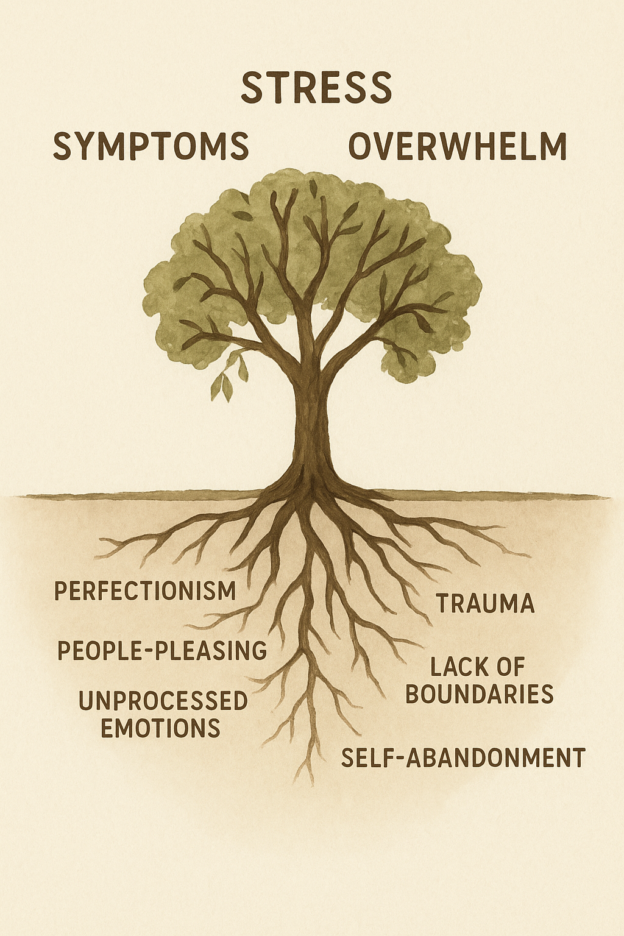
Our bodies don’t sound alarms for no reason. A dysregulated nervous system is often trying to tell us something. Here are some of the deeper, underlying causes that can keep a person stuck in chronic vigilance:

Emotional and Psychological Roots of Dysregulation

  • Perfectionism rooted in a belief that you’re never “good enough.”
  • Unprocessed emotions such as grief, anger, sadness, loneliness, or hurt.
  • Unresolved trauma or childhood neglect that created lasting beliefs of being unsafe or uncared for.
  • Lack of emotional safety in current work or relationship environments.
  • Growing up in chaos or unpredictability, leading to long-standing hypervigilance.
  • Internalized pressure to have no needs, resulting in people-pleasing, overfunctioning, or self-abandonment.

When these patterns are present, nervous system activation makes sense. It is trying to protect you from situations that echo past danger—or from present circumstances that feel overwhelming or unsustainable.

Why Regulation Techniques Aren’t Always Enough

Breathing exercises, grounding skills, or mindfulness practices can absolutely be helpful tools. They can settle your system in moments when you’re not actively being triggered. They can create space, reduce intensity, and help you reconnect with your body.

But expecting these techniques to fully resolve dysregulation—without addressing the underlying causes—is like turning down the volume on a fire alarm without checking for fire and then putting the fire out.

Often, true nervous system calming comes from the deeper work of changing behavioral patterns, relationships, environments, or beliefs that continually activate your stress response.

The Real Work of Re-Regulating Your Nervous System

Real inner calm grows from actions that are less about soothing and more about changing the conditions that keep your system overwhelmed. That might include:

  • Advocating for yourself in relationships or at work.
  • Tolerating healthy conflict and learning that it can be safe, instead of avoiding it.
  • Allowing yourself to feel grief, anger, sadness, or loss rather than pushing those emotions away.
  • Setting and honoring boundaries, even when it feels uncomfortable.
  • Addressing unhealthy or one-sided relationships, including the possibility of ending them.
  • Letting go of “shoulds” and making important decisions based on self-respect and your values, not pressure or fear.
  • Processing trauma so that your body can finally register that the danger is over.
  • Releasing the belief that your job is to keep everyone else happy at the cost of your own well-being.

These aren’t quick fixes. They are forms of emotional labor, self-advocacy, and true inner healing that change the very reasons the nervous system goes into fight-or-flight in the first place.

When the Body Isn’t Calm, There’s Usually a Reason

When you’re not feeling relaxed or grounded, it doesn’t necessarily mean you’re doing anything wrong. There may be a valid, very human reason that your system is activated. Your nervous system may be trying to say:

“Something in your life needs attention.”

Sometimes the most powerful nervous system regulation isn’t a technique—it’s a boundary.
Or an honest conversation.
Or letting yourself cry.
Or finally telling the truth about what hurts.
Or choosing yourself in a situation where you’ve habitually chosen everyone else.

Inner Calm Comes From Alignment, Not Perfection

Ultimately, nervous system regulation is less about mastering calming practices and more about aligning your life with your needs, your values, and your emotional truth.

When you feel safe to be yourself, safe to have needs, and safe to feel your feelings, your nervous system naturally settles.
Not because you forced it to—
but because it no longer has to protect you from things you are ignoring.

If you’d like help to achieve more calm in your nervous system, I’d be honored to help you. Contact Me, Or Schedule an appointment.

The Mind/Body Connection in Chronic Symptoms

neck pain

Pain and other chronic symptoms—like IBS, vertigo, tinnitus or bladder issues—can take over our lives. Physical symptoms naturally create fear, and symptoms and fear together can become the center of our attention, pushing everything else into the background.

When pain or symptom keep us from doing the things we enjoy, it’s common to feel anxious or depressed. In fact, most people who struggle with chronic pain also experience anxiety or depression. It’s not always clear which came first, because they are closely connected. Many people with chronic symptoms have experienced childhood adversity, and are likely to be perfectionists or people-pleasers—traits that can increase stress and make us more vulnerable to both physical and emotional symptoms.

While chronic pain and other physical symptoms appear to be based in the body, research shows that trauma, emotions and stress play a powerful role—even sometimes when pain seems to have a clear physical cause.

I experienced this firsthand. Years ago, I developed chronic wrist tendinitis that was attributed to  typing too much. My pain was real and constant, and I tried everything—chiropractic, physical therapy, massage, acupuncture, Alexander Technique, and Feldenkrais classes. Nothing helped for long. I had to stop doing many things I loved. I wore wrist splints, used voice-recognition software, and avoided cooking, gardening, and knitting. Despite all these precautions, I was in pain for more than two years.

Then I found Dr. John Sarno’s book Healing Back Pain. He discovered that many people who had  physical findings that might cause pain—like herniated discs or arthritis—had completely different pain experiences. Some had severe pain, while others with the same imaging results felt none at all. One large study of over 3,000 people found that spine changes seen on MRIs are usually a normal part of aging and don’t necessarily cause pain. His work with his patients demonstrated that emotional stress and repressed anger can create very real physical pain. He helped many thousands of people recover from chronic pain with his medical practice and his books. I was one of them. 

It’s important to note that pain or other symptoms are not “all in your head.” Chronic symptoms are  absolutely real. But all our experiences are mediated by the brain, and our brains interpret pain based on not only sensations sent from the body, but also based on expectation, and the perception of danger. If we’re afraid that something is wrong with our bodies, or of conflict, negative emotions, or anything else we experience, pain and other symptoms can begin or intensify. On the other hand, if we feel safe and confident in our body’s strength, and in our ability to handle our emotions and our relationships, they can fade—even when nothing physical has changed. This is why treatments that reduce fear and increase a sense of safety can be so effective. The fact that changes in in how we interpret the world impact our symptoms is why we call these symptoms “neuroplastic.”

Over the past several years, there has been increasing evidence supporting Dr. Sarno’s theory, and new treatments have begun to be proven to help patients overcome neuroplastic symptoms. In 2020, I completed training with the Pain Psychology Center to work with clients using Pain Reprocessing Therapy (PRT). A study at the University of Colorado found that people with long-term back pain experienced major or complete recovery after just four weeks of PRT.

PRT helps retrain the brain to interpret pain signals differently. It uses mindfulness, cognitive, and behavioral techniques to reduce fear, calm the nervous system, and build a sense of safety in the body. As fear decreases, pain often does too—sometimes permanently.

Chronic symptoms, as miserable as they can be, often serve hidden purposes. They may give us permission to slow down, rest, or seek care from others. They may distract us from emotions we’d rather not face. Understanding these patterns can help us reclaim our energy and our lives.

When we start to truly trust that our bodies are strong and resilient, and that we can handle our emotions and the stresses in our lives, we can stop letting pain dictate our choices. With the right tools and mindset, recovery is possible—and life can feel full and joyful again.


Take a test to see if your chronic pain or symptoms are likely treatable using a mind-body approach

References:

  1. Sarno, M.D., John E. Healing Back Pain: The Mind-Body Connection. New York, NY: Warner Books, 1991.
  2. Sarno, M.D., John E. The Mindbody Prescription: Healing the Body, Healing the Pain. New York, NY: Warner Books, 1998.
  3. Published online 2014 Nov 27. doi: 10.3174/ajnr.A4173