
It isn’t Always About “Calming Down”
There’s a lot of talk these days about the importance of “nervous system regulation.” We often hear that when the body is in fight-or-flight mode, the brain interprets danger signals and may create physical symptoms or anxiety as a protective response. This is true—but it’s only part of the story.
What often gets overlooked is that nervous system regulation doesn’t always happen directly. We can’t always breathe, meditate, or stretch our way out of fight-or-flight, especially if our bodies are sounding an alarm for a real and valid reason. Sometimes the issue isn’t that we don’t know how to calm down—it’s that something in our lives is keeping us stuck in a state of tension.
So instead of asking, “How do I calm my nervous system?” it can be more helpful to ask: “Why is is my nervous system activated in the first place?”
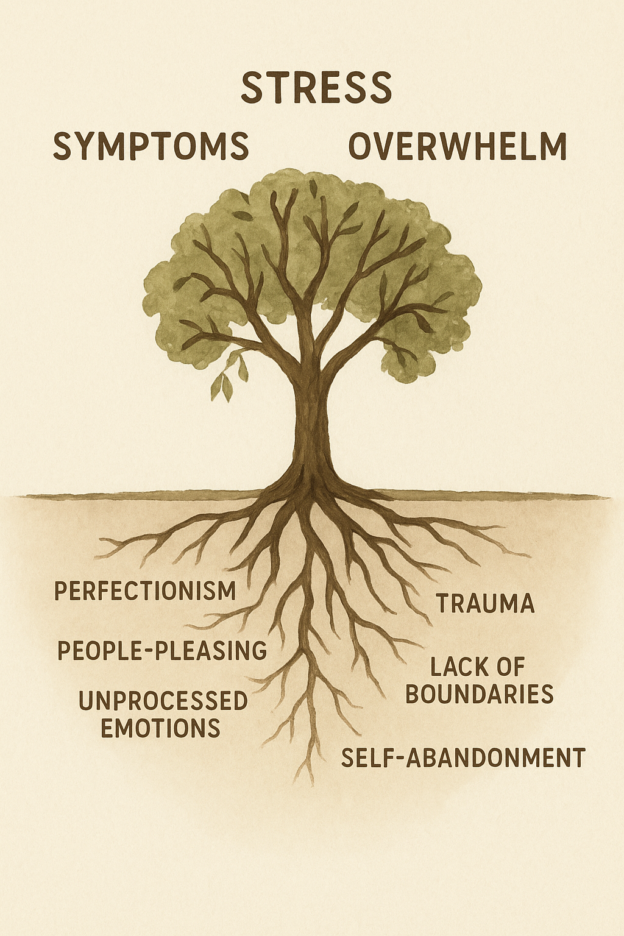
Our bodies don’t sound alarms for no reason. A dysregulated nervous system is often trying to tell us something. Here are some of the deeper, underlying causes that can keep a person stuck in chronic vigilance:
Emotional and Psychological Roots of Dysregulation
- Perfectionism rooted in a belief that you’re never “good enough.”
- Unprocessed emotions such as grief, anger, sadness, loneliness, or hurt.
- Unresolved trauma or childhood neglect that created lasting beliefs of being unsafe or uncared for.
- Lack of emotional safety in current work or relationship environments.
- Growing up in chaos or unpredictability, leading to long-standing hypervigilance.
- Internalized pressure to have no needs, resulting in people-pleasing, overfunctioning, or self-abandonment.
When these patterns are present, nervous system activation makes sense. It is trying to protect you from situations that echo past danger—or from present circumstances that feel overwhelming or unsustainable.
Why Regulation Techniques Aren’t Always Enough
Breathing exercises, grounding skills, or mindfulness practices can absolutely be helpful tools. They can settle your system in moments when you’re not actively being triggered. They can create space, reduce intensity, and help you reconnect with your body.
But expecting these techniques to fully resolve dysregulation—without addressing the underlying causes—is like turning down the volume on a fire alarm without checking for fire and then putting the fire out.
Often, true nervous system calming comes from the deeper work of changing behavioral patterns, relationships, environments, or beliefs that continually activate your stress response.
The Real Work of Re-Regulating Your Nervous System
Real inner calm grows from actions that are less about soothing and more about changing the conditions that keep your system overwhelmed. That might include:
- Advocating for yourself in relationships or at work.
- Tolerating healthy conflict and learning that it can be safe, instead of avoiding it.
- Allowing yourself to feel grief, anger, sadness, or loss rather than pushing those emotions away.
- Setting and honoring boundaries, even when it feels uncomfortable.
- Addressing unhealthy or one-sided relationships, including the possibility of ending them.
- Letting go of “shoulds” and making important decisions based on self-respect and your values, not pressure or fear.
- Processing trauma so that your body can finally register that the danger is over.
- Releasing the belief that your job is to keep everyone else happy at the cost of your own well-being.
These aren’t quick fixes. They are forms of emotional labor, self-advocacy, and true inner healing that change the very reasons the nervous system goes into fight-or-flight in the first place.
When the Body Isn’t Calm, There’s Usually a Reason
When you’re not feeling relaxed or grounded, it doesn’t necessarily mean you’re doing anything wrong. There may be a valid, very human reason that your system is activated. Your nervous system may be trying to say:
“Something in your life needs attention.”
Sometimes the most powerful nervous system regulation isn’t a technique—it’s a boundary.
Or an honest conversation.
Or letting yourself cry.
Or finally telling the truth about what hurts.
Or choosing yourself in a situation where you’ve habitually chosen everyone else.
Inner Calm Comes From Alignment, Not Perfection
Ultimately, nervous system regulation is less about mastering calming practices and more about aligning your life with your needs, your values, and your emotional truth.
When you feel safe to be yourself, safe to have needs, and safe to feel your feelings, your nervous system naturally settles.
Not because you forced it to—
but because it no longer has to protect you from things you are ignoring.
If you’d like help to achieve more calm in your nervous system, I’d be honored to help you. Contact Me, Or Schedule an appointment.