Tag Archives: Boundaries

Empowering Mind-Body Healing for Women

A supportive, empowering message to women who have had their pain and symptoms dismissed for far too long.

For generations, possibly since the advent of modern medicine, women’s health concerns have been minimized, misunderstood, or dismissed outright. Women have been labeled “hysterical,” “dramatic,” or “too sensitive” when they were suffering with very real physical conditions. Many of us have been told our symptoms are “all in our heads,” that we’re overreacting, and that we simply need to calm down or push through. Or to “just get over it.”

Given that history, it is completely understandable that the idea of mind–body healing can feel uncomfortable or even insulting. For many women, it appears to echo the same harmful messages we’ve heard their whole lives:
“You’re imagining it.”
“It’s your fault.”
“Just get over it.”

That’s the opposite of what women deserve. 

Women are not “more emotional.” We are more burdened.

Women experience higher rates of chronic pain, autoimmune illness, migraines, IBS, fatigue disorders, anxiety, and other stress-related conditions—not because we are weaker or more fragile–in fact, just the opposite! It is very likely that these conditions impact women more because we often carry more:

  • Caregiving responsibilities
  • Emotional labor at home and at work
  • Discrimination and microaggressions
  • Financial and workplace instability
  • Exposure to trauma and unsafe relationships
  • Pressure to be accommodating, calm, kind, and self-sacrificing

Women are often expected to perform at work as if we don’t have families, and at home as if we don’t have jobs. We are trained to consider others’ needs before their own. We are told to smile through pain and stay “pleasant,” no matter what we’re carrying. A body under those conditions will eventually speak up. Often through pain or symptoms.

When symptoms are neuroplastic, they’re not imaginary

Pain or symptoms that are created or maintained by the brain are not “made up,” “in your head,” or less legitimate or impactful. It simply means the nervous system has become overwhelmed and has created the symptom as an act of self-protection. The brain is incredibly powerful, and it can create real: 

  • pain
  • inflammation
  • skin conditions
  • digestive issues
  • dizziness
  • fatigue
  • nausea
  • sensitivities to foods, sounds, light and chemicals
  • sensations of numbness, tingling, itching and burning, and others

Neuroplastic symptoms are real. They can be severe. They can be disabling. And they are treatable.

Not with willpower.
Not with “pushing through.”
Not with being a “good patient.”
Not with pretending you’re fine.

But with approaches that calm and retrain the brain, address stress and overwhelm, restore agency, and bring your system back into balance.

Why women often hesitate to embrace mind–body neuroplastic treatments:

Women have excellent reasons to be cautious:

  • We’ve often been dismissed by providers or been given answers and treatments that were not helpful or that made things worse.
  • We’re often told that our symptoms are due to stress without receiving support to address the root cause.
  • We’ve lacked adequate care, support, or time to heal.
  • We haven’t had our suffering taken seriously.

So when someone says, “Your pain may be neuroplastic,” many women understandably hear:
“You’re imagining it.”
or
“It’s up to you to fix it alone.”

But in truth, neuroplastic healing is one of the most validating approaches available, because it says: “Your symptoms are real, your suffering is legitimate, and your healing matters.”

Mind–body healing is not self-blame — it is self-restoration.

Neuroplastic treatments do not ask women to ignore structural medical issues that need treatment, and they are not based on the idea that pain or discomfort is “all in your head.” What mind-body healing does do is empower women with tools that have been proven to reduce or eliminate chronic pain and other symptoms by addressing the overloaded nervous systems that so many women live with every day.

Healing happens through:

  • Learning to feel safe in your body again
  • Setting boundaries where life has demanded too much
  • Addressing perfectionistic or self-sacrificial patterns that make life difficult
  • Giving yourself the compassion you rarely receive from others
  • Processing emotions you’ve had to suppress to survive
  • Reclaiming agency over your health and wellbeing

It is about restoring your sense of safety and learning to live in a way that allows you to feel your feelings, prioritize your well-being, and live in a more authentic way. Living more authentically allows your nervous system to thrive and allows you to engage with life in a more joyful way. 

You deserve a healing path that sees the whole you

Mind–body healing is not a message that something is wrong with you. It is a message that you’ve likely carried too much, and it’s taken a toll on your well-being. Your symptoms — painful, frustrating, frightening as they are — are your body’s way of saying:

“I’ve been carrying too much for too long.”
“I need care just as much as I give it.”
“I deserve safety, rest, and support.”

You deserve to feel fully supported as you reclaim your health, your agency, and your well-being.

If you’d like to schedule a consultation to discuss the symptoms you’re experiencing, contact me, or schedule an appointment.

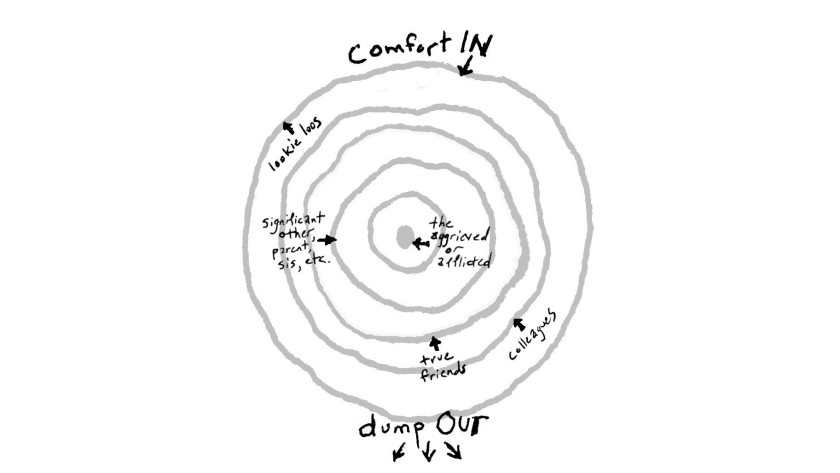
How Not to Say the Wrong Thing

A friend posted this, and I have to share it. We all know how easy it is to say the wrong thing when someone’s ill or in a crisis. Some otherwise caring people avoid connecting with loved ones during those times simply because they don’t know what to do or say. This article is a simple “how to” for providing support to those in need without making things worse. A Must-Read! http://articles.latimes.com/2013/apr/07/opinion/la-oe-0407-silk-ring-theory-20130407

Principles for Making Joint Custody Work: Being a better Co-Parent

joint custodyParenting together after a divorce challenges the most dedicated of parents. So many feelings get stirred up while we work through the difficulties of co-parenting. The following principles can help provide guidance for parents in being their best selves following a divorce:

1. Be flexible

To the extent possible, accommodate minor custody changes needed by the other parent. Being flexible allows everyone to get their needs met. This does not mean unduly inconveniencing yourself or your child, or being a doormat for an unreasonable ex.

2. Take the high road and keep your cool

Even if you are unhappy with your ex’s behavior, take the high road. Who do you want to be? What are your modeling for your co-parent? For your kids? Avoid escalating conflict for the benefit of your child, by noticing when emotions are running high and waiting before acting on them. (Such as – have a policy of letting all emotion-laden emails rest in your “Drafts” Folder for a day before sending.)

3. Pick your battles

Consider when it is constructive to bring up concerns with your ex, and when it will cause a fight that you can’t win. Some parents can coordinate rules, agree on homework expectations, etc. But if you have a less cooperative co-parenting relationship, be realistic about what will be accomplished by a discussion and save it for when it matters. There will be times when, despite your best efforts, your ex will say “no,” won’t cooperate, won’t respond or participate. At those times, grieving that which you cannot have may be a hard but necessary road to peace of mind.

4. Whose battle is it, anyway?

When a problem arises, spend some time to determine who is the best person to solve it. If the problem is primarily between your ex and your child, support him or her in addressing it with the other parent rather than stepping in.

5. Communicate directly with your ex to the best of your ability, or directly with your children’s providers (teachers, doctors, etc.)

Communicate with your co-parent rather than passing messages through your child. Communicate in a factual, business-like manner. A voicemail or email on “switch day” can cover information about homework, medical information, current disciplinary issues, and upcoming events or needed supplies. If contact = conflict, then you can communicate with your children’s providers directly. When making requests, do so in simple and direct language. If your ex tends not to reply or to say “no,” consider in advance what you will do in these cases and whether to let them know in advance what you will do in these instances.

6. Provide both love and limits

Kids need nurturing as well as structure and stability, especially during stressful times. Maintain consistent routines, and set and enforce firm and fair rules, even when it’s hard. Consistency helps children feel secure. Age-appropriate responsibilities build life skills and empower kids to find solutions.

7. Make it easy for your child to have what he/she needs

To the extent possible, have everything your child needs at both homes, rather than expecting your child to transport what he/she needs. Schools will provide extra copies of textbooks for their second home. Kids should have age-appropriate responsibility for managing their belongings among two homes.

There are no simple solutions when it comes to the long, hard road of parenting after divorce. It is so important that you make space for all the emotions that are triggered by interacting with your ex-partner. Getting support from friends, family or a therapist can make the path an easier one. Making an effort to apply these principles, and having compassion for yourself when you inevitably fall short of complete success, is a step toward successful co-parenting.

This article was written by Meri Levy, M.A., MFT and Lena Glaser, M.A.
People-Pleasing Moms: At Risk

Sad new mom holding baby - people-pleasing momsOne of the common themes I come across when working with mothers experiencing depression and anxiety is perfectionism and people-pleasing. Moms get worn out when they are trying to make everyone happy all the time.

There are often good reasons for a tendency to be over-responsible for the feelings of others. Many of us come from families where there was an unspoken expectation that a child must be “good,” because one or both parents were unable to tolerate the challenge of even normal childhood misbehavior. Or sometimes, children develop an unconscious habit of caretaking for others as a way to get their own needs met.

Read the Article

Take a test to see if you have Prenatal or Postpartum Depression

Does Your Personality Style Put You at Risk for Postpartum Depression?

mother baby

By Meri Levy, MA, MFT

What are the risk factors for Postpartum Depression and anxiety? Can your personality contribute to your risk? Check out this article of mine, published on www.GoodTherapy.org.

Take a test to see if you have Prenatal or Postpartum Depression